
Panama: Panama City, the Canal, and What They Don't Want You to Know
So, you think you know Panama? Think again. You probably picture pristine beaches, maybe the mighty Panama Canal, or a bustling Panama City. But beneath that postcard-perfect surface, there’s a murky reality, a place where some stories just... vanish. And right now, it feels less like a tropical paradise and more like a land of loose ends and bureaucratic black holes.
The Vanishing Act: A Family Lost in the Jungle
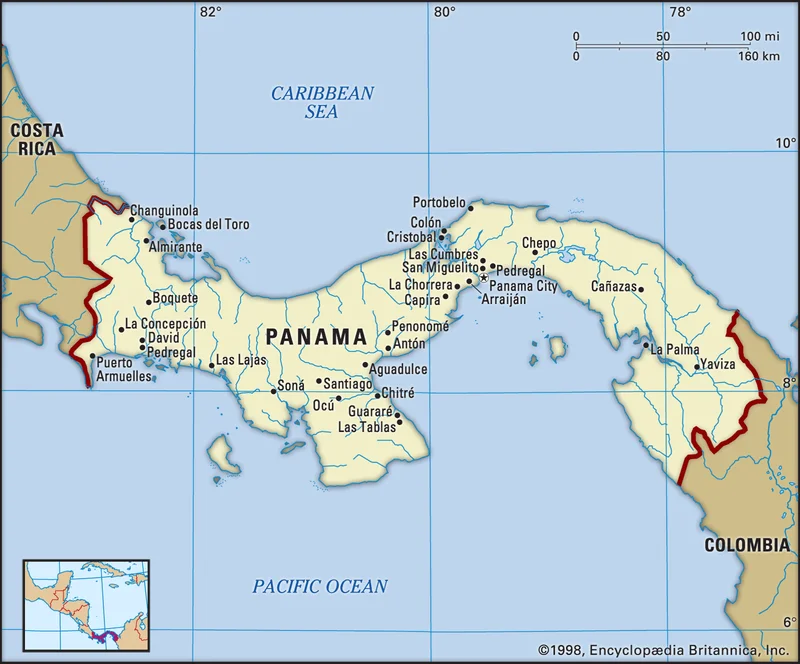
Six months. Six damn months, and a Canadian father and his two-year-old daughter are just... gone. Poof. Vanished in the thick, humid air of northwestern Panama’s rural Bocas del Toro province. We're talking about Ghussan Iqbal and little Nousaybah, a kid who probably still believes in Santa, if she’s even still around. His seven-month-old son, Musa, found dead in the Changuinola River just over a week after they disappeared. Let that sink in for a second. A baby. Found in a river.
Ghussan, a McMaster University grad from Hamilton, Ontario, reportedly left his residence empty-handed on May 21st, without his phone, wallet, money, or even food. He was last seen with his children around 6 a.m. that day. No word since. His brother, Sulman, and sister-in-law, Nagham, flew down there, spending three agonizing weeks in Panama, trying to piece together what the hell happened. They even got an Amber Alert issued, which, you know, is something.
But since they’ve been back in Canada, it’s been a masterclass in frustration. The Canadian government, Global Affairs Canada (GAC), is basically shrugging its shoulders. "Consular officials are actively engaged," they say. "Safety and security of Canadian citizens abroad is a 'top priority'." Yeah, right. Nagham calls it "not useful." Sulman adds, "It’s honestly very scary knowing that as a Canadian citizen you’re basically out of luck if something happens to you abroad." It's like they're telling you, "Have fun on your adventure, but if you step on a landmine, that’s your problem." This isn't just a tragedy, no, it's a goddamn dereliction of duty on multiple fronts, leaving a family in an endless purgatory.
The Panamanian authorities? They’re "kind and helpful," but they’ve got "few resources" and move at a "snail’s pace." Everything in Panama, Sulman notes, is "a very slow process." Bureaucracy and delays are unending, especially for forensic test results. How are we supposed to get answers when the whole system seems designed for maximum inertia? It’s not a search; it’s a slow-motion unraveling, and offcourse, hope fades with every passing day.
Shifting Stories and Corporate Collisions
Then there’s the conflicting narrative. Ghussan’s wife told his family he "ran away" to the Changuinola River, suggesting mental health issues. His brother and sister-in-law, who video-chatted with him days before, saw no signs of psychosis. And honestly, who takes a seven-month-old and a two-year-old into "mountainous, treacherous jungle terrain" without a phone, wallet, or food? It’s like trying to navigate a minefield blindfolded while juggling flaming chainsaws – pure suicide, or something far darker. The family found out the wife had "at least four identities, lied about her education and ethnic background," and gave inconsistent details. They now "strongly suspect that foul play may have occurred." Especially since baby Musa was found "exactly where Ghussan’s wife said he would be." Coincidence? Or a breadcrumb trail laid by someone who knows exactly what went down?
While this heartbreaking mystery festers, Panama’s also wrestling with other demons. The Cobre Panama copper mine, a behemoth that accounted for about 5% of the country’s GDP, has been shut down since November 2023 after massive protests. Now, an "independent audit" is underway, with initial findings due any day now and a final report by February. First Quantum, the company behind it, says restarting the thing could take six to nine months. The government will "assess the concession, technical findings and environmental results before deciding whether the mine will restart, be modified or remain closed." It’s like watching a high-stakes poker game where the government’s holding a terrible hand but trying to bluff its way to a win. Everyone's got a stake, from First Quantum’s CEO Tristan Pascall to the 2,000 workers currently assigned to audit and safety, but the real question is, who’s actually going to benefit when the dust settles? And will it ever truly settle, or just shift to a new, equally murky chapter? The economic pillar of the country, just hanging there, waiting for a decision that feels perpetually out of reach.
Some Answers, But Mostly Just More Questions
It’s not all stagnation, I guess. In Panama City, Florida, police actually arrested two guys – Aaron Brooks and Javonte Russ – for the murder of 17-year-old Tamir Rice. Boom. Done. Or at least, arrests are made. It shows some things can move quickly when the will is there. Panama lawmakers even jetted off to Taiwan, defying China, looking for "investment and cooperation." Good for them, I guess. At least some things are moving forward, even if it’s just politicians on a junket.
But none of that helps Sulman and Nagham Iqbal back in Canada, who carry "a measure of guilt" and "haven’t even been able to start the process of grieving." They’re holding out hope, offcourse, but it's a fragile thing. "The reality is we may never really get the full story as to what happened to my brother and niece," Sulman admitted. It’s a chilling thought, isn’t it? That people can just disappear, and the official response is a slow-motion shrug. This ain't about justice anymore; it's about basic human decency, and it feels like Panama, and maybe even Canada, is coming up short.